
Chunky Wee Bag goes to market

Spring Quilt Market begins on Thursday in Portland! I’m going to Market, but not in a booth – I’ll be there running around, so if you need to meet up with me just email me to make some arrangements. I’d love to meet you!

I’m sure you’ve been reading about everyone’s last minute preparations in the blog rolls this week, and my studio has not escaped the insanity.

I spent last week hustling through some Chunky Wee Bags. The good folks at Andover sent some fabrics to play with from their new Poppy Modern and KITSCHenette lines.

photo

Sorry for the “ironing board in the studio” shot… I was hustling to get ‘em in the mail!

I made a couple of bags for the sweet Hoffman Fabrics folks too – but I don’t see the fabric on their website so I won’t let the cat out of the bag just yet -I’ll show you the photo once I get the go ahead. I’ll give you a hint though… humming birds!

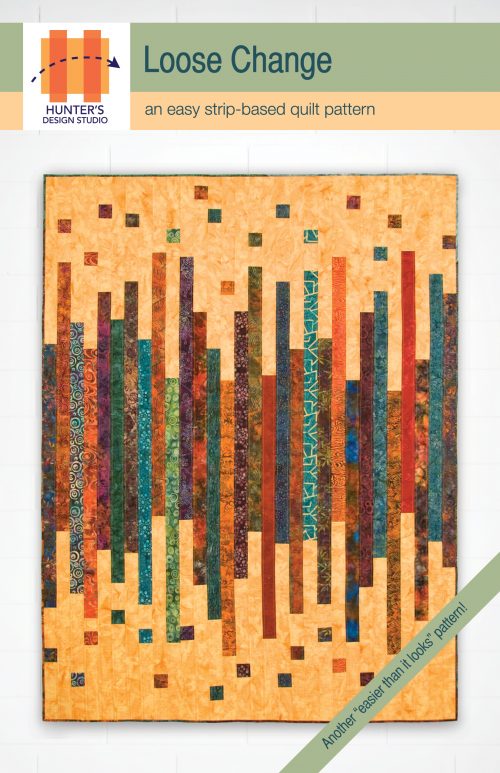
You will also find another Chunky Wee Bag in the Brewer booth – it’s one from the pattern cover, made from Melody Miller’s fabulous Viewmaster Reel fabric. I should have bought way more of that when I had the chance!

il_fullxfull.204785708

If you spot one of my bags at Quilt Market (or you’ve made one yourself), please snap a photo of you with the bag and post it to my FB Page. Be goofy if you like! We’ll do something fun with them when I get back from Market, and give some goodies away!

Image of View master fabric from here.

Paper-piecing hack – slip sliding away!

I was paper-piecing in the studio last week, and ran into that pesky problem of getting one of the bottom pieces folded back on itself ONE TOO MANY TIMES. Harrumph. Nothing like holding the seam ripper endlessly to make you reach for the chocolate. Mind you… like I need an excuse to reach for the chocolate :-)

So as I munched on said chocolate (the wonderful 70% Super Smooth Belgian Mini Bars from Trader Joe’s) I pondered a way to end the “under-folding.” Not that I like having problems to solve, but I find solving these kind of puzzles fun.

I thought that a slicker surface might help – slick enough that nothing at all could drag the fabric and pull it out of place. And lo and behold, I just happened to have a Supreme Slider*  in the studio.

IMG_3357

They are designed to give you a more slippery surface when doing free-motion quilting, but lo and behold, they do the same for paper-piecing.

IMG_3356

I put the edge right up in front of the feed dogs and yep… worked like a charm. I might even buy a second one and cut out the feed dog hole to fit. The only downside I’ve found thus far is that I can’t see the bobbin run out (it’s a top loader) – but even when I can see it I forget about it until I’ve sewn a mile or two on empty, so that hardly registers as a complaint.

IMG_3358

And while we’re looking at my machine, did you notice anything different? Yep, that’s not my beloved Janome 6500 – it’s her new sister, a Janome 8900 QCP. I got a chance to be in partnership with Janome, and signed up in a heartbeat borrow this girl. We’re having fun getting acquainted, and I’m looking forward to doing some machine quilting with all eleven inches of harp space. I’ll be designing some new stuff for Janome, so watch this space.

OK… back to the studio! What are your favorite paper-piecing tricks?

PoweredByJanome

*I’m not a rep for the Supreme Slider – just a fan!

Chihuly Glass – I liked it, but…

I’ve been home from Seattle for over week. A week? Already a week has flown by! Nuts!

On the day before I left, we visited the Space Needle and Chihuly Garden and Glass which is a recent addition to the area by the Needle and the Experience Music Project. The Chihuly space is an interesting one – obviously created just for this purpose, and therefore each installation is roomy and beautifully orchestrated. All artists should be so lucky to have their work seen like this. It’s also a serious marketing space – like most museums or theme park rides, you get to exit through the gift shop, and in this case it’s one hell of a merchandising gauntlet of all things Chihuly. This guy is as much a business as he is an artist (something that all artists should pay attention to).

I have an uneasy relationship with Dale Chihuly’s work. On the one hand, I’m thrilled to see an artist in the “crafts” world make good. So often glass, metal, ceramics and fiber get the bastard step-child treatment in the fine art world. Chihuly has done some trail-blazing work with the glass medium, and in my book deserves accolades for it. But I have some “buts” too, and some thought about how these relate to quilting, so here goes:

I like the fact that he breaks scale with the huge pieces. He took glass off the pedestal, and pushed it into something so big and sculptural that it can’t be ignored like a shiny tchotchke in the corner. There is striking tension between the perceived fragility of glass and the towering structures he creates with it.

IMG_3323

For instance, the Mille Fiori garden above. There is contrast between the idea of a garden of delicate plants made from hard glass, which, though fragile in its own right, will last years longer than the life of a real bloom. The intense color and scale are also quite confronting, while the smooth surfaces invite a museum-forbidden touch. And now that I’ve owned (and dropped) three different iPhones, my thoughts on the fragility of glass are not what they once were!

I find that I get pulled out of reverie of enjoying the pieces by wondering about how they are made. How *does* one create a tower of spiraling shoots? What type of armature is needed to support all the components? How many get broken? Do they make spares? Who dusts all this stuff? I will also confess that I think this way about a lot of things, so it might not be the fault of the art that I ponder its construction rather than its meaning.

And while I’m definitely a color junkie, I find the endless full saturation of bright colors a bit exhausting. Note to self here… not all quilts need ORANGE :-)

IMG_3328

Of course I liked the ORANGE chandelier, above. But I also liked it the best because it is different from spiraling tendrils of most of Chihuly’s chandeliers, like the blue one on the right. It’s a shape that he uses constantly, and so while the first one or two are pretty WOW, the tenth one becomes a bit of a yawn. I think quilts do a better job of varying what can be done with our standard shapes of squares and rectangles, though I do wonder if there is any new take on the wonky log cabin block possible. I also find the chandeliers confronting. While I’ve become accustomed to the traditional lead crystal behemoths of older buildings, the spiky-ness of these in general makes me walk around them rather than under them. And is it because I can’t see, and therefore trust, the armatures like I can their older counterparts?

IMG_3319

This vessel was in the Northwest Room. It is from a series of works where Chihuly was looking at the weaving patterns in traditional Native American baskets and responding to them in glass. Although this work pre-dates the big sculptures, I found it more deeply engaging. I like art that creates a conversation with other art. And yes, I was wondering how the woven lines are made in glass.

IMG_3332

These vessels in the Macchia forest were also lovely. Each was at least two feet across, so a technical marvel as well as one of simple beauty, and lit to reflect their colors on the walls. I’ve traveled to a lot of European churches with spectacular stained glass, and seeing the colors reflected through to the interiors has always been a profound delight. I think I liked the reflections more than the vessels!

The interior spaces lead out to a full outdoor garden, where the glass is planted to interact with real flora. I was delighted by the pairings of plants and glass based on colors and shapes, and I think this was my favorite space. I wonder if the glass was made to match the plants, or the plants were found to match the glass. No matter… conversations between them were notable.

IMG_3340 IMG_3337 IMG_3339

Chihuly is now known for no longer blowing his own glass. An injury took him out of the studio, and while he was directing his assistants he found he liked it better that way. The glass works sold in the gift store bear his name, but not his hand. And this is one of those things I find tricky… if I bought a Chihuly, would it be enough that he directed its creation, or would I expect him to be the maker? Art has a very long history of the studio assistant, and what it really comes down to is that if you want to get more work made, you eventually need more hands to help you. And who could blame an up-and-coming artist for wanting the stability of a studio job with access to the mind and tutelage of a guy who reportedly makes millions. The chance to hone your skills with someone else’s materials budget alone is pretty juicy.

I think about this in terms of how it relates to me as a pattern designer. While a pattern might be mine, if you make it I think it then becomes a collaboration. But if I give you the fabric, and tell you where to place it, are you still an involved artist, or are you just the construction tech at that point? I think push and pull of this line also exists when ever we send out a quilt for quilting, and especially if the resulting stitch pattern is the choice of the long-armer rather than the direction of the top-maker.

In my case, I would not credit the person constructing for me if their role offered no artistic interpretation beyond their technical assembly capabilities. I would, however, credit the person that quilts it if I gave them room to do their thing. And I doubt that I would ever stop sewing entirely – I love it too much!

So what are your thoughts?

All images taken by me with the permission of staff at Chihuly Garden and Glass.

Collage winner!

Random.org chose number 21 from the 80 comments received!

“Coochmom” – look for an email from me!

And just for grins, I had Random.org choose a second number for a free Chunky Wee Bag pattern – number 72!

So Doris… look for an email from me too!

Thank you all for playing along – and don’t forget to ask your local quilt store for this fabric!

La Conner Quilt & Textile Museum – and Collage giveaway reminder!

In case you missed it over the weekend, Carrie Bloomston’s brand new Collage fabric blog-hopped here on Saturday. The comments are still open if you’d like a chance to win a layer cake of this pretty fabric line!

And on to today’s post – a visit to the La Conner Quilt & Textile Museum. It’s located north of Seattle and west of Mount Vernon in a town of quaint shops. We also had a great lunch there!

The museum is housed in the historic Gaches Mansion, an impressive Victorian built in the 1890′s. All three floors of the manse house the museum, with the top floor built out in gallery-white spaces (currently filled with art quilts, but alas no photos of them allowed). The rest of the building is restored and decorated to suit its architecture, and was filled with mostly antique quilts.

While I seldom make anything that approaches traditional, I have an appreciation of our quilt history. Quilt museums quilts are often fascinating because they have quilts that have notable stories or design elements, and I found a few such quilts at La Conner!

First up, a two-fabric Texas Star:

Texas Star, by Martha Logan Hall, 1853. Donated by Bromleigh and Mary Lamb. Courtesy Latimer Quilt & Textile Center

Texas Star, by Martha Logan Hall, 1853. Donated by Bromleigh and Mary Louise Lamb. Courtesy the Latimer Quilt & Textile Center.

What I liked best about this quilt was the asymmetrical border – what a mystery! Perhaps the quilt was on a bed that was tucked into the corner of a room, and the maker decided to only border the parts that were seen. Or perhaps that’s as far as the fabric stretched?

Next, some happy bluebirds:

Applique Blue Birds, Mary Hammer Faulders, circa 1930. Donated by Bromleigh and Mary Louise Lamb. Courtesy the Latimer Quilt & Textile Center.

Applique Blue Birds, Mary Hammer Faulders, circa 1930. Donated by Bromleigh and Mary Louise Lamb. Courtesy the Latimer Quilt & Textile Center.

I must admit, I didn’t notice the birds on first look… I saw the abstract shapes forming the circles. The next images is for my embroidery loving friends – check out the dense French knots that make up the flowers:

Detail of Applique Blue Birds, by Mary Hammer Faulders. Donated by Bromleigh and Mary Louise Lamb. Courtest the Latimer Quilt & Textile Center.

Detail of Applique Blue Birds, by Mary Hammer Faulders. Donated by Bromleigh and Mary Louise Lamb. Courtest the Latimer Quilt & Textile Center.

Next, the Balloon Quilt, probably my favorite of the day. I’m generally not a fan of quilts from the 1930′s – I want more depth out of my colors. But this quilt wowed me with the insane amount of perfectly appliqued 1″ circles (that I believe might have also been puffed up with trapunto). I don’t do applique, but I sure appreciate it when I see it done well. This is such a sweet, cheerful quilt:

The Balloon Quilt, maker unknown, circa 1930. Donated by Olga Keesling. Courtesy the Latimer Quilt & Textile Center.

The Balloon Quilt, maker unknown, circa 1930. Donated by Olga Keesling. Courtesy the Latimer Quilt & Textile Center.

More detail:

Detail, The Balloon Quilt, maker unknown, circa 1930. Donated by Olga Keesling. Courtesy the Latimer Quilt & Textile Center.

Detail, The Balloon Quilt, maker unknown, circa 1930. Donated by Olga Keesling. Courtesy the Latimer Quilt & Textile Center.

And more detail:

Detail, The Balloon Quilt, maker unknown, circa 1930. Donated by Olga Keesling. Courtesy the Latimer Quilt & Textile Center.

Detail, The Balloon Quilt, maker unknown, circa 1930. Donated by Olga Keesling. Courtesy the Latimer Quilt & Textile Center.

And finally… check out the rabbit!

Detail, The Balloon Quilt, maker unknown, circa 1930. Donated by Olga Keesling. Courtesy the Latimer Quilt & Textile Center.

Detail, The Balloon Quilt, maker unknown, circa 1930. Donated by Olga Keesling. Courtesy the Latimer Quilt & Textile Center.

I think the maker of this quilt not only had a great fabric stash, but a delightful sense of humor too! FYI – a pattern for it is available in the museum gift shop. And no… I won’t be making one!

Last quilt for the day, a contemporary one by Cathy Favret, titled Petroglyphs:

Petrogylphs, by Cathy Favret, 2001. Donated by Cathy Favret. Courtesy the Latimer Quilt and Textile Center.

Petroglyphs, by Cathy Favret, 2001. Donated by Cathy Favret. Courtesy the Latimer Quilt and Textile Center.

The redwork patterns were adapted from petroglyphs along the rock walls of the Columbia River. The creation of the Dalles Dam in the 1950′s flooded these carvings, but not before Cecile Terry Colcord captured rubbings of them. I thought they were unlike any other petroglyph drawings I’d ever seen.

Some details:

Detail, Petroglyphs, by Cathy Favret, 2001. Donated by Cathy Favret. Courtest the Latimer Quilt & Textile Center.

Detail, Petroglyphs, by Cathy Favret, 2001. Donated by Cathy Favret. Courtest the Latimer Quilt & Textile Center.

Detail, Petroglyphs, by Cathy Favret, 2001. Donated by Cathy Favret. Courtest the Latimer Quilt & Textile Center.

Detail, Petroglyphs, by Cathy Favret, 2001. Donated by Cathy Favret. Courtest the Latimer Quilt & Textile Center.

Detail, Petroglyphs, by Cathy Favret, 2001. Donated by Cathy Favret. Courtest the Latimer Quilt & Textile Center.

Detail, Petroglyphs, by Cathy Favret, 2001. Donated by Cathy Favret. Courtest the Latimer Quilt & Textile Center.

So that’s your dose of quilt history for today!

Introducing Collage!

My friend Carrie Bloomston of SUCH Designs has just sent her first fabric collection, Collage (for Windham Fabrics), out into the world, and lucky me, I get to share it with you!

collage-catalog (1)

I met Carrie at the Long Beach Quilt Festival in 2011. Her debut booth was a spark of bright and cheerful in an otherwise black-draped sea of business-as-usual. I was immediately drawn to her Wonky Little Houses pattern, and she and I ended up having a wonderful gab.

At the time, I was barely a year out of grad school, and still utterly exhausted and somewhat shell-shocked by the experience of surviving an MFA program. Carrie shared that she was still recovering from a demanding program at RISD, but that playing with fabric was moving her back into her old skin, and that painting was once again calling to her. We ended up bonding over being refugees from art school.

Fast forward to last year… Carrie and I ended up in adjacent booths at Long Beach 2012. It was my first big show as Hunter’s Design Studio, and we again shared a bunch of important conversations about navigating this crazy quilt world. She left me with a story about the danger of wearing layers of other people’s coats (as in allowing yourself to be weighed down with other people’s ideas of how your business should be run) and truly, it was just the conversation I needed to hear that day! So that’s the story of how we met – like many quilting stories… two women find a common thread, and as we pass it back and forth, we weave a friendship. I can’t think of a better way to make new friends.

Anyhow – back to the important task at hand… introducing the fabric! Collage is sweet evidence that Carrie made it back to her paints, and obviously had some fun. Carrie sent fabric to all her blog tour folks, and asked us to just make something from it. If you’ve been following the tour, you’ll see that we all found something in the line that spoke to our own way of seeing the world, and some great projects have ensued.

36530-2

For me, the fabrics have a sense of wonder, play and delight – all things I know that Carrie (and I) have worked hard to regain after formal education. Being a Word Girl, I love the text fabrics the best, and adore the many encouraging sayings that Carrie purposely built into them.

36525-4

I really enjoy using spots and stripes in things, and Collage offers a bunch of both. The border Birdie print is spectacular, and really usable. The “solids” have subtle tone variations and lines that create depth beyond a flat, monochromatic field. There really isn’t a piece in the group that can’t stand on its own, or play well with others.

Bag smaller

I chose to make one of my latest patterns with the fabric, a chunky little messenger-style bag (the pattern is making its debut here!). While the text fabrics called to me the most, I thought the Birdies made for a better lead role on the flap, with the teal cups and scrappy newspaper stripes as wonderful supporting players. Because I couldn’t find a comfortable way to put ORANGE on the bag, I instead used the deep orange-red scrappy stripes to whip up a little tissue holder to go with it. I had to get my ORANGE in there somehow!

DSCN2164

The lovely folks at Windham Fabrics have offered each blog host a layer-cake pack of all the Collage fabrics as a giveaway! So leave me (and Carrie!) a comment below to enter in the drawing for the layer cake, and I’ll use the random number site to choose a winner. I’ll leave the comments on for a couple of days (let’s say the end of my Tuesday), but don’t wait too long to throw your hat in the ring!

And in case you’ve missed them, here’s the blog tour roster – stop in and see all the things Collage can do:

April 9 – Julie Goldin 
April 11 – April Rhodes
April 12 – Tia Curtis
April 14 – Ramona Burke
April 15 – Sally Keller
April 16 – Angela Walters
April 19 – Jenny Kelly

April 22 –Karen Le Page (One Girl Circus)